
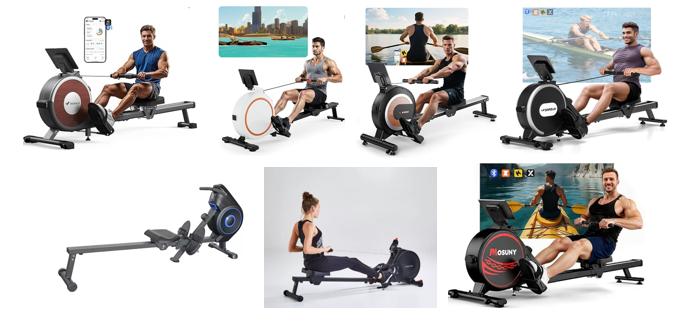




Looking for the best rowing machines under £300? We review 7 budget-friendly rowers that offer solid value, realistic performance, and honest expectations for home workouts.
Budget Rowing Without the Marketing Nonsense
Rowing machines have a habit of making bold promises. Full-body transformation, Olympic-level performance, and “commercial gym quality” all for the price of a weekend away. The reality, especially under £300, is usually a bit more… grounded. That does not mean cheap rowing machines are useless. Far from it. It just means expectations need to be set properly.
In this guide, we have reviewed seven rowing machines that were all priced under £300 at the time of our review. Some are surprisingly capable, some are basic but honest, and a few fall firmly into the cheap and cheerful category. They made the list not because they are perfect, but because they offer attractive value for the money.
Premium Features, Budget Reality
A couple of these rowers try to look premium with app support, multiple resistance levels, or sleek designs. Others keep things simple with manual resistance and foldaway frames. We have included both, but we remain realistic about what budget machines can and cannot do.
Not the Best Rowers Ever, Just the Best Under £300
Let’s be clear. These are not high-end water rowers or commercial air machines. Some product descriptions should be taken with a pinch of salt, and we call that out where needed. If something claims elite performance at this price, we politely raise an eyebrow.
Value, Space, and Consistency Matter Most
Under £300, the real wins are affordability, ease of storage, quiet operation, and consistency. If a rower helps you move regularly, work your whole body, and does not end up as an expensive clothes rack, it has done its job. This list is for people who want honest cardio at a sensible price, without falling for exaggerated claims. If that sounds like you, let’s get rowing (and reading)
Best 7 Rowing Machines Under £300
#1, Decathlon Foldable Rowing Machine for Home Cardio
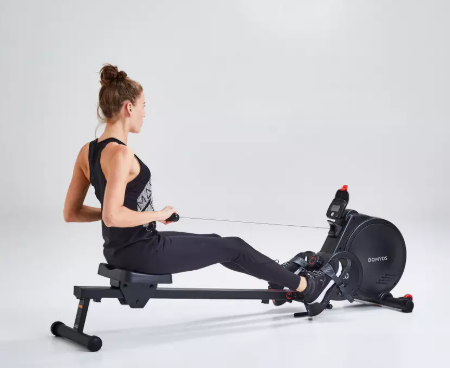
If you like your fitness equipment to be sensible, honest, and quietly competent, the Decathlon Domyos ESS 120 fits the bill nicely. This is not a flashy rowing machine and it does not pretend to be one. What it offers instead is reliability, decent build quality, and the reassurance of buying from an established brand that understands home fitness.
The 4 kg flywheel delivers a smooth, controlled rowing motion that feels consistent rather than aggressive. Resistance is magnetic with eight tension levels, which is more than enough for beginners, casual rowers, and anyone focused on steady cardio rather than brute-force power. If you are expecting explosive sprint sessions, you may find the resistance ceiling a little polite, but for everyday use it does the job well.
The coaching console keeps things simple with six core functions such as time, distance, strokes, and calories. The tablet and smartphone holder is a welcome touch, allowing you to follow workouts or distract yourself with Netflix while rowing. Assembly is minimal, and once folded, the machine stores neatly thanks to transport wheels, a big plus for smaller homes.
With a maximum user weight of 130 kg and Decathlon’s generally solid warranty support, this rower feels like a safe, dependable buy in the £250–£300 range. It is not exciting, but it is trustworthy, which is often exactly what people want.

#2, MOSUNY Rowing Machine
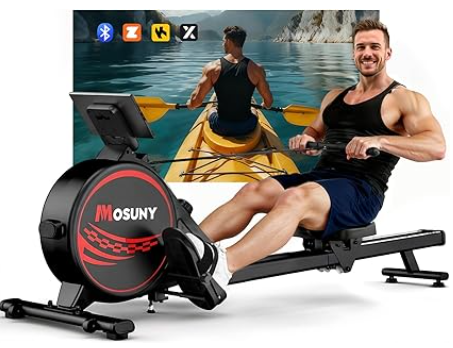
The MOSUNY rowing machine sits at the opposite end of the budget spectrum and proudly so. Typically priced between £100 and £150, this is a budget-first rower that aims to deliver maximum features for minimal spend, with mixed but interesting results.
On paper, it looks impressive. You get magnetic resistance with up to 16 levels, app connectivity with Zwift and Kinomap, a foldable frame, and a surprisingly high claimed weight capacity. In practice, it is important to remember this is still a lightweight, entry-level rowing machine built to hit a price point.
The rowing motion is quiet and smooth enough for home use, especially in flats or shared spaces. The double rail system adds a bit of stability, although it does not feel as planted as higher-end machines. Resistance levels are adequate for beginners and light-to-moderate workouts, but experienced rowers may find the intensity lacking despite the headline numbers.
App support is a nice bonus, but the LCD screen does not display data while using the app, which feels like a small but annoying compromise. Assembly is quick, storage is easy, and at under 20 kg, it is very manageable to move around.
Overall, the MOSUNY is cheap, cheerful, and surprisingly capable for the money, as long as expectations stay realistic. It is best suited for beginners, casual users, or anyone wanting affordable full-body movement without financial commitment.
#3, DMASUN Rowing Machine
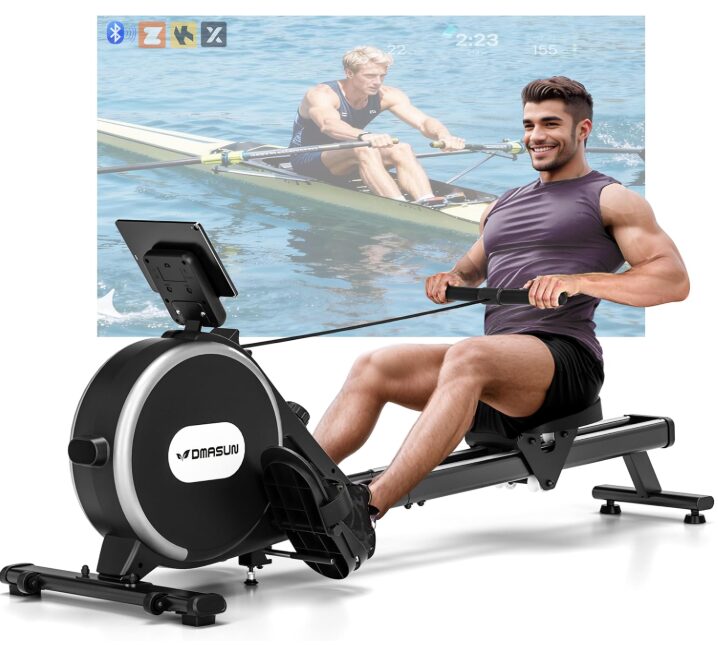
The DMASUN rowing machine is one of those products that makes you double-check the price tag. Usually hovering around the £100 mark, it promises a lot, and while some of those promises need to be taken with a pinch of salt, it still delivers surprisingly decent value for very little money.
This is a magnetic rower with up to 16 resistance levels, which sounds impressive at first glance. In reality, the resistance range is best suited to beginners and casual users rather than seasoned rowers. That said, for light cardio, rehabilitation-style workouts, or general movement on quieter days, it performs well enough. The dual slide rail helps stability and keeps the rowing motion reasonably smooth and quiet, making it suitable for flats or shared households.
App compatibility with Kinomap is included, although like many budget machines, the console does not display data while connected to the app. The LCD screen itself is basic but functional, showing time, distance, strokes, and calories. Build quality feels lightweight but not flimsy, and the padded seat and non-slip pedals add a layer of comfort you might not expect at this price.
Assembly is straightforward, storage is easy, and DMASUN backs the machine with a three-year service promise, which adds peace of mind. Overall, this is a budget-friendly, no-frills rower that punches above its weight, as long as expectations remain sensible.

#4, Pro Fitness Air and Magnetic Rowing Machine

The Pro Fitness Air and Magnetic rower takes a slightly different approach compared to the purely magnetic machines in this list. By combining air and magnetic resistance, it aims to offer a more dynamic rowing feel, even though it remains firmly in budget territory.
With eight resistance levels, control is straightforward and easy to adjust mid-session. The rowing action feels a bit more engaging than entry-level magnetic-only machines, although the 2 kg flywheel limits how heavy or powerful the stroke can become. This is very much a cardio-focused rower rather than a strength-building beast.
The console is clear and easy to read, tracking time, stroke count, calories, and scan functions. It does the basics well, without overwhelming you with data. The oversized padded saddle is comfortable enough for moderate sessions, and pivoting footplates help accommodate different rowing styles, although taller or heavier users may find the 100 kg weight limit restrictive.
It folds neatly for storage and includes transport wheels, making it practical for home use where space matters. Build quality is acceptable rather than premium, and the one-year warranty reflects that this is a functional, affordable machine rather than a long-term investment. Overall, the Pro Fitness rower suits beginners who want a slightly more “rowing-like” feel without spending much, but it is best approached with realistic expectations.
#5, Wenoker Rowing Machine
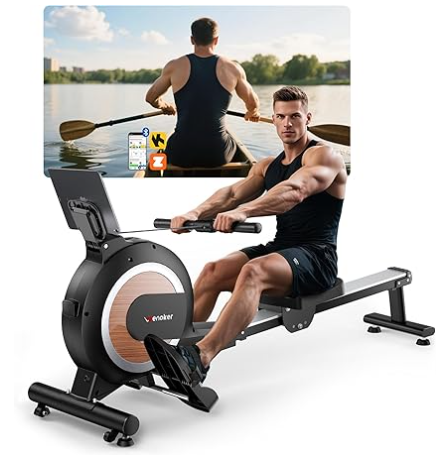
The Wenoker rowing machine sits firmly in the middle of the under-£300 category. It is not the cheapest on this list, but it does offer a bit more polish than the ultra-budget options, especially in terms of resistance range and app compatibility.
With 32 levels of magnetic resistance, Wenoker clearly wants to appeal to users who like fine-tuning their workouts. In practice, many of those levels feel quite close together, but there is still enough variety to suit beginners through to moderately active users. This is not a power rower, but it works well for steady-state cardio, longer sessions, and general fitness.
Bluetooth connectivity allows pairing with Zwift and Kinomap, which adds motivation and visual interest. As with most machines at this price point, the app experience depends heavily on your phone and internet connection, so it is best seen as a bonus rather than a core feature. The LCD display covers the essentials and is easy to read during workouts.
Build quality feels solid for the money, with a 350 lb weight capacity and a smooth slide rail that stays quiet even during longer sessions. Assembly is manageable, storage is straightforward thanks to transport wheels, and customer support appears reasonably responsive. Overall, the Wenoker is a safe, sensible mid-range choice for users who want more features than the cheapest models without drifting into premium pricing.
#6, Superun 32 Levels Rowing Machine
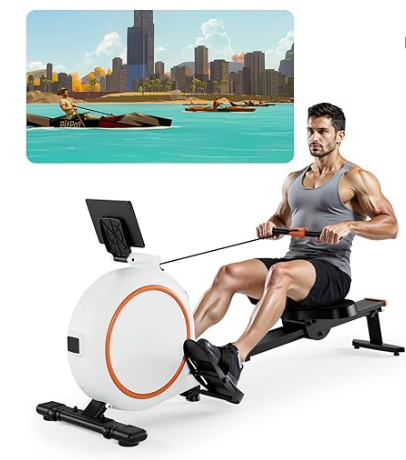
The Superun rowing machine is one of the more interesting value options under £300, largely because it combines a high resistance range with smart features, while still keeping the price closer to entry-level territory.
It offers 32 levels of magnetic resistance, again with the usual caveat that more levels do not always mean dramatically more challenge. That said, there is enough progression here for beginners to build fitness gradually, and the belt-drive system keeps the rowing action smooth and impressively quiet.
Superun leans heavily into its app-based experience, promoting AI trainers and online events. In reality, these features are nice extras rather than essential tools, but they can help with motivation if you enjoy structured sessions or tracking progress digitally. The LCD console works independently too, showing stroke count, time, distance, calories, and pace.
The frame feels sturdy enough for regular home use, with a 136 kg weight limit and decent stability during rowing. Assembly is quick, storage is simple, and the three-year support promise adds confidence for buyers worried about longevity. In short, the Superun is a feature-rich budget rower that offers strong value for money, as long as you approach the smart features with realistic expectations.
#7, MERACH Rowing Machine
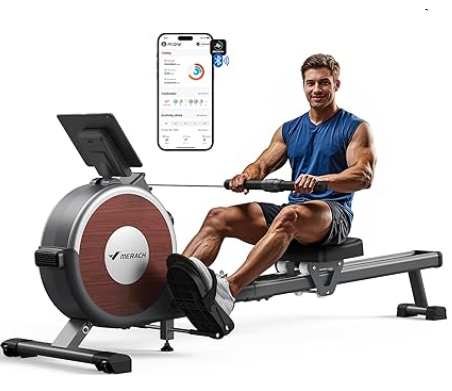
The MERACH rowing machine sits comfortably in the sensible middle ground of the under-£300 category. It is not flashy, not extreme, and not pretending to be a commercial gym beast, which is actually part of its appeal.
With 16 levels of magnetic resistance, MERACH keeps things simple. There is enough range here for beginners, casual users, and anyone focused on steady cardio rather than brute-force power. Strong rowers will likely outgrow it, but for everyday fitness, weight loss, or rehabilitation-style training, it does the job quietly and smoothly.
The dual slide rail design improves stability and gives the rowing motion a more balanced feel than many single-rail budget machines. Noise levels are impressively low, making it ideal for flats, shared homes, or early-morning workouts where rattling rails are not appreciated.
MERACH’s app is one of the better free options at this price point, offering guided workouts and basic training plans without forcing a subscription. Kinomap compatibility is a nice extra, but again, think of it as motivation rather than magic. The LCD display covers the essentials, and setup is straightforward with partial pre-assembly. Overall, this is a well-rounded, no-drama rowing machine that focuses on comfort, quietness, and consistency rather than bold marketing claims.
Conclusion - Honest Recommendations
Let’s be clear, none of the rowing machines on this list are perfect, and none of them are “the best rowing machine ever made”. What they are, however, are some of the best performers available under £300 at the time of our review, and that matters.
If you want the most balanced option, the Decathlon Domyos ESS 120 stands out for reliability, usability, and sensible design. It costs more than the cheapest options but feels less like a compromise.
If your priority is absolute budget value, machines like DMASUN, MOSUNY, or Superun offer remarkable features for the money. Just remember that app claims, resistance numbers, and weight ratings can be optimistic. They are great for starting out, not for elite training.
For those who want quiet workouts and comfort, especially in shared spaces, MERACH and Wenoker are strong choices. They are ideal for consistent cardio, weight loss, and low-impact fitness.
Who these are for?
- Beginners starting their fitness journey
- Home users with limited space or budget
- People wanting low-impact, full-body cardio
- Anyone who values quiet operation over brute resistance
Who these are not for?
- Competitive rowers or CrossFit athletes
- Users wanting water or air resistance realism
- Anyone expecting commercial gym durability
Final Word
Bottom line, under £300 you are buying value, not miracles. Set realistic expectations, focus on consistency, and any of these machines can genuinely help improve your fitness.



Recent Comments