
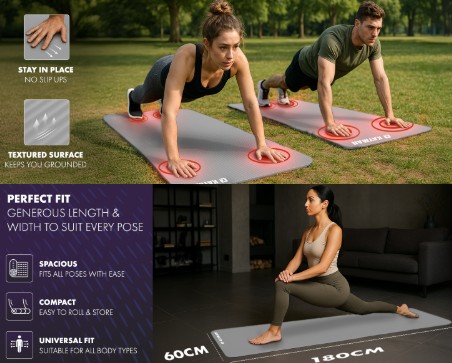




An honest, experience-led review of the Kayman multi-purpose extra thick foam yoga mat. Covers comfort, grip, value for money, and who it may or may not suit, based on real user feedback.
Kayman Multi-Purpose Extra Thick Foam Yoga Exercise Mat Introduction
Yoga and exercise mats sit in an awkward space for buyers. They look simple, prices vary wildly, and most people only realise what matters after they have already used one for a few weeks. The Kayman Multi-Purpose Extra Thick Foam Yoga Exercise Mat is aimed squarely at people who want something comfortable, lightweight, and affordable, without paying premium brand prices.
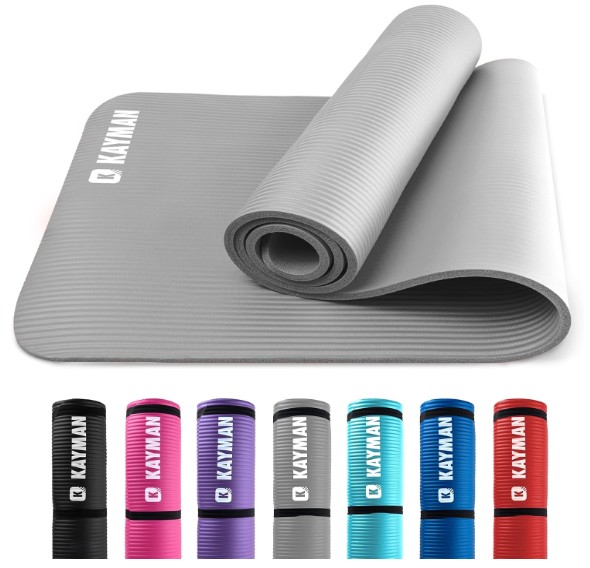

Budget Category
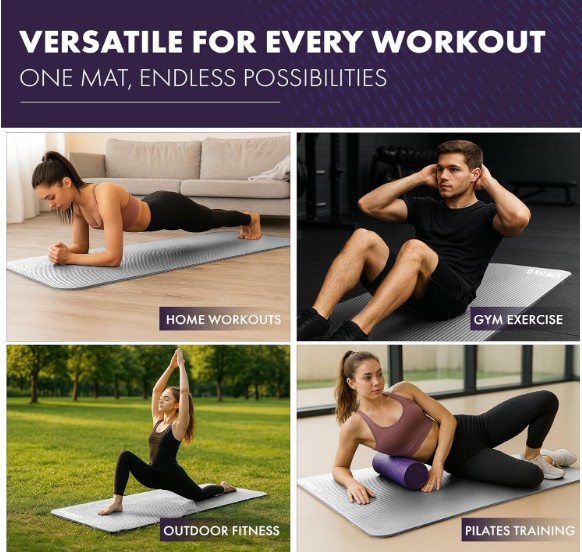
This mat typically sits in the £10 to £15 range in the UK, which places it firmly in the budget category. It is marketed as a versatile option for yoga, Pilates, stretching, resistance workouts, and light therapy or rehab exercises, both at home and in the gym. That wide positioning explains why it attracts a large volume of reviews, many positive, but also a noticeable number of mixed opinions.
Key Features at a Glance
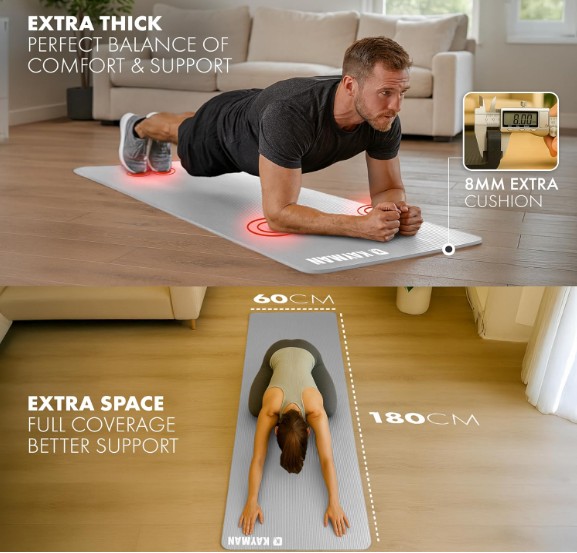
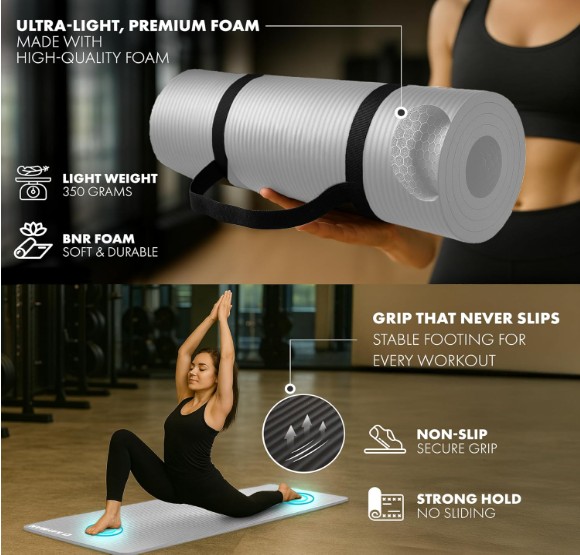
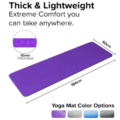
Kayman uses a 6mm thick foam construction, designed to provide cushioning without becoming overly soft or bulky. For many buyers, especially those exercising on hard floors, thickness is one of the first things they look for. The mat is described as wide and long enough for most standard floor exercises, although it is worth noting that it is not unusually large compared to premium yoga mats.
Marketing
The material is marketed as high density TPE-style foam, with a ribbed surface to increase friction and reduce sliding. In practice, grip appears to depend heavily on conditions and usage, something that comes up repeatedly in user feedback. When dry, many users report adequate traction, while others find it less reliable during sweat-heavy sessions.
Portability
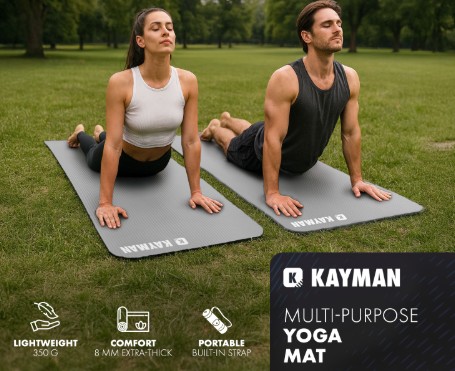
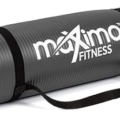
Portability is another focus. The mat is lightweight and rolls easily, making it suitable for people who carry it between home, work, or classes. Some listings mention a built-in travel strap, although several buyers note this is not always included, which can affect expectations.
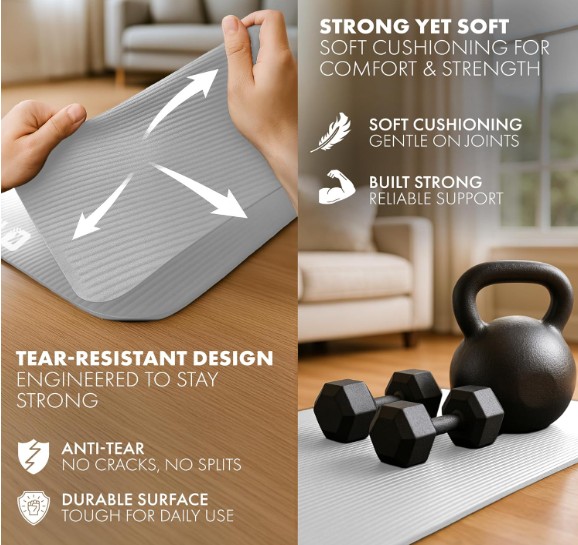
Colour Options
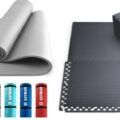
Colour choice is generous for the price, with options including grey, black, pink, purple, teal, and blue. Overall, the Kayman mat presents itself as a practical, low-commitment option for casual to moderate exercise, rather than a specialist mat aimed at advanced practitioners or studio-level use.
This balanced positioning helps explain why it receives strong value-for-money praise alongside more cautious, experience-dependent feedback, which the next sections will explore in detail.

Positive Reviews
Across a large number of UK buyer reviews, positive feedback around the Kayman Yoga Mat tends to cluster around a few consistent themes, comfort, value for money, thickness, and ease of use. While many comments are brief, taken together they give a fairly clear picture of what this mat does well for everyday users.
Comfort and cushioning on hard floors
One of the most frequently praised aspects is comfort, particularly when exercising on wooden, tiled, or otherwise hard floors. Many users highlight the mat’s 6mm foam thickness as a noticeable improvement over thinner budget mats, especially for floor-based movements, stretching, and gentle strength work.
Several reviewers describe the mat as “comfortable to use” and “really comfy to stretch on”, with others noting that it feels “soft and quite plush” while still offering enough structure to support movement. One user summed this up simply as a “thick and comfy mat”, while another said the cushioning meant they “don’t feel my wooden tiles” underneath.
This sense of added padding appears particularly appreciated by people doing Pilates, stretching classes, rehabilitation-style exercises, or martial arts drills, where prolonged contact with the floor is common. For larger users, the extra foam also seems to help reduce pressure points, with one review noting there was “enough padding for the larger person faced with a hard floor”.
Thickness that feels supportive without being bulky
Closely linked to comfort is the perception that the mat strikes a reasonable balance between thickness and practicality. Reviewers regularly describe it as “quite thick, which is great”, but without complaints that it feels unstable or overly spongy.
A number of buyers mention that the thickness feels “perfect” for home workouts, offering support without making balance-based poses feel awkward. One reviewer highlighted that it is “nice and thick and flexible to fold”, suggesting the foam has some give without feeling flimsy.
For people moving from very thin mats or exercising directly on the floor, this extra layer seems to make sessions feel more forgiving, particularly for knees, hips, and lower back during seated or lying exercises.

Good perceived quality for the price
Value for money is one of the strongest recurring positives. Many reviews explicitly mention price, often pairing it with comments about quality. Phrases such as “excellent value for the price”, “great value for money”, and “quality and price” appear repeatedly.
Several buyers express pleasant surprise at the overall build, especially given the typical £10–£15 price point. Descriptions like “really good quality”, “very good quality”, and “product as shown” suggest the mat largely meets expectations set by the listing images and description.
One review describes it as a “plush exercise mat” that feels better than expected for the cost, while another simply states it “does the job”, a phrase that, in budget fitness gear, often signals quiet satisfaction rather than disappointment.
Lightweight and easy to store or transport
Another consistent positive is how easy the mat is to handle. Many reviewers note that it is lightweight, rolls up easily, and “packs away easily” after use. This appears to matter to people using it at home with limited storage, or carrying it to classes.
Some users specifically mention appreciating the included straps or elastic bands for keeping it rolled, although experiences here vary, which is addressed in later sections. Where included, portability is described as a genuine convenience rather than a gimmick.
The mat’s flexibility also gets occasional mention, with users finding it easy to roll, fold, or reposition during workouts without fighting against stiff material.
Grip and stability during typical use
Grip receives mostly positive feedback in this set of reviews, particularly during dry, low-to-moderate intensity workouts. Several users describe it as having “good grip so you don’t slip round” or being “really non slip” compared to previous mats they had used.
One reviewer noted that it “doesn’t slip compared to my previous yoga mats”, while another said it felt stable enough for stretching classes and general exercise routines. This suggests that, for many users, the ribbed foam surface provides sufficient traction for standard yoga poses and home workouts.
That said, most of these positive comments appear to come from users doing slower-paced or floor-focused routines rather than high-sweat, fast-flow sessions.
Suitable size for a wide range of users
Size is another area where feedback is generally reassuring. Multiple reviews describe the mat as “good size”, “really long”, or “perfect length”. One user specifically mentioned that someone around 6ft tall “should be comfortable using it too”, suggesting it accommodates taller users reasonably well.
For stretching and full-body floor exercises, having enough length to extend without constantly stepping off the mat is a small but meaningful detail, and many buyers seem satisfied in this regard.
Easy to clean and maintain
A smaller but notable group of reviews highlight ease of cleaning. The foam surface is described as wipeable, with one user explaining they “easily just wipe the surface with a cloth and suitable solution”. This simple maintenance seems to appeal to people doing regular workouts who do not want a mat that absorbs sweat or odours too quickly.
Combined with the water-resistant description, this reinforces the mat’s appeal as a low-effort, everyday option rather than something that needs careful handling.
A straightforward, no-fuss exercise mat
Many of the most positive reviews are short and direct, using phrases like “perfect”, “all good”, “great product”, or “very happy with my purchase”. While these comments do not go into detail, their volume suggests a broad base of users who feel the mat meets their needs without complication. For buyers looking for a simple, affordable mat for home exercise, stretching classes, or light gym use, these reviews reflect satisfaction rooted in practicality rather than hype.
Mixed Reviews
The mixed reviews for the Kayman Yoga Mat tend to come from users who are broadly satisfied with the mat’s comfort and value, but encountered small inconsistencies, unmet expectations, or minor drawbacks that stopped it short of a full five-star rating. These comments are useful because they often highlight practical, real-world considerations rather than outright faults.
Good value, with expectations kept realistic
A common theme across four-star reviews is that buyers generally feel they got what they paid for. Phrases like “good buy worth the money”, “good value for the price”, and “product is just as advertised” appear repeatedly. Many users seem comfortable framing the mat as a sensible budget purchase rather than a premium yoga accessory.
One reviewer described it simply as “okay for the price”, noting that while it looks good and feels comfortable for home workouts, it does not excel in every area. Another compared it to everyday items, stating that it is “light, cushioned and is a mat”, suggesting that it fulfils its basic purpose without standing out dramatically.
This tone reflects a pattern where users are satisfied overall, but are careful not to overpraise a product positioned at the lower end of the price range.
Comfort and thickness generally appreciated
Much like the five-star reviews, comfort and thickness are still strong positives in the mixed feedback. Users frequently describe the mat as “soft, comfy to use”, “really nice thick yoga mat”, or “thick but soft”. For Pilates and floor-based exercises, several reviewers say it works well and feels supportive enough for the time they spend on it.
One fairly tall reviewer noted that “the length was adequate, as I’m fairly tall myself”, while another commented that it is “long enough for me with my arms and legs stretched” at around 5’4. Others mention that it feels longer than it looks in photos, which was a pleasant surprise for some.
However, a few comments hint that while the thickness is appreciated, it can introduce minor trade-offs, such as being “a bit thicker” than expected or not fitting into a conventional yoga bag.
Carry strap confusion and missing accessories
By far the most consistent source of mixed feedback is the carry strap. Many four-star reviewers specifically mention disappointment around this point. Several expected a proper carry strap based on product photos, but received only “two bits of elastic to hold it together”, or no strap at all.
Comments like “soft mat, but no carry strap which is disappointing”, “advertised as coming with one but mine hasn’t”, and “only gave 4 stars as the carry thing was not with it” appear frequently. Even when users otherwise liked the mat, this mismatch between expectations and reality clearly affected their overall rating.
Some reviewers were forgiving, stating that “for the price it seems good” despite the missing strap, while others suggested that the product images or description should be updated to reflect what is actually included.

Grip and stability varies by user and workout type
Grip is another area where opinions become more nuanced. While some four-star reviewers say the mat “doesn’t slip on the floor” and has “great slip resistance”, others report the opposite experience.
One user described it as “a comfy, good looking mat for home workouts” but added that there is “little to no grip which can be tricky to exercise with”. Another noted that it can feel “a bit stretchy when doing some yoga moves”, though they added it was “not a problem” for their usage.
This suggests that grip performance may depend on factors such as flooring type, workout intensity, and whether the session involves a lot of dynamic movement or sweat.
Minor issues with smell, packaging, and finish
A handful of mixed reviews mention small quality control or presentation issues. Some users reported a “rubber smell” or “strange smell” when first opening the mat, which they hoped would fade over time. While not described as overwhelming, it was distracting enough for at least one reviewer to reduce their rating.
Others mentioned packaging problems, such as receiving the mat with “broken packaging” or slight damage to a corner that appeared to have occurred before packing. In most cases, these issues did not prevent use, but they did affect first impressions.
Durability seems acceptable, with light wear over time
Longer-term users in the mixed category generally describe durability as acceptable for the price. One reviewer said that after using it “for a while now”, it showed “a few signs of wear and tear” but was “holding up quite well”.
Another mentioned that the mat “does stretch a little during exercise” but still considered it “overall ok”. These comments suggest that while the mat may not feel indestructible, it appears to cope reasonably well with regular, moderate use.
Overall impression from mixed feedback
Taken together, the mixed reviews paint a picture of a mat that largely delivers on comfort and value, but can fall short on details like accessories, grip consistency, or presentation. Most four-star reviewers seem to accept these compromises as part of buying a budget mat, especially when the core experience remains comfortable and practical.
For buyers who value cushioning and price above everything else, these issues may feel minor. For those who care about accessories, precise grip, or a premium finish, the same points may be more noticeable.
Negative Reviews
The negative reviews for the Kayman Yoga Mat are more detailed and, in many cases, more consistent in the issues they raise. While some buyers still describe the mat as usable or “fine for the price”, others report problems serious enough to affect safety, durability, or suitability for yoga altogether. These comments help clarify where the mat may fall short, particularly for certain types of users.
Perceived lack of thickness and support
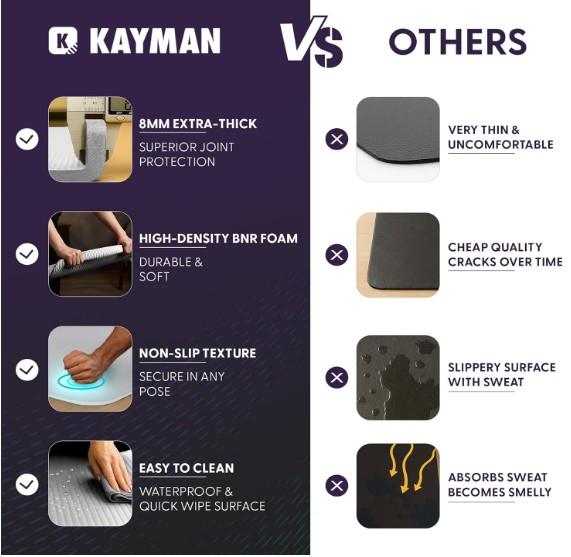
Despite being marketed as “extra thick”, a notable number of negative reviewers felt the mat was thinner than expected. Several describe it as “thin”, “very very thin”, or “barely 5mm thick”, with one user stating it felt “not much different from bare floor”.
Some buyers accepted this as a trade-off at the price point, using phrases like “you get what you pay for”, while others felt the description was misleading. One reviewer wrote that it was “not as thick as I expected” and another said it was “too thin for comfort” during longer sessions.
This mismatch between expectation and reality appears to be a major source of dissatisfaction, especially for people buying specifically for joint cushioning or prolonged yoga practice.
Stretchy, spongy feel under pressure
Another frequent complaint is the mat’s tendency to stretch or compress under weight. Several users describe it as “too spongy”, “stretchy”, or “melting into a piece of foam”. This characteristic seems to become most noticeable during poses or exercises that involve hands and feet bearing weight, such as planks, downward dog, or mountain climbers.
One reviewer noted “ridiculous amount of stretch when trying to use it”, while another said it “moves under my feet when I’m doing my yoga workouts”. For some, this created a feeling of instability, making balancing poses more difficult and reducing confidence during movement.
In more critical reviews, this stretchiness led users to conclude that it is “not for yoga” or “totally useless” for proper yoga practice, though some still felt it might suit low-impact or floor-based exercise.
Grip and slipperiness concerns
Grip is one of the most polarising aspects of the Kayman mat, and negative reviews highlight its limitations clearly. Several users describe it as “slippery”, particularly during faster transitions or higher-energy workouts. Comments such as “very slippery if you want to do high intensity exercise” and “sliding all over the place” appear repeatedly.
One reviewer warned it could be “slippery and possibly dangerous” when moving quickly between positions, while another said it “does not grip the floor well or offer good grip for the feet”, especially in wide stances. For these users, the lack of traction undermined the mat’s suitability for yoga and dynamic workouts.
There are also mentions of squeaking noises on wooden floors, which some found distracting or unsuitable for group classes.
Durability and early wear issues
Durability is another significant concern raised in lower-rated reviews. Some users report visible wear after only a handful of uses, including cracking, tearing, or chunks of foam coming away from the surface.
Examples include comments such as “bits coming off within first couple of uses”, “worn through completely after 6 months”, and “starting to rip already”. One particularly detailed review mentioned that fingernails and even a dog’s claws left marks, causing the mat to deteriorate quickly.
For buyers hoping for a long-term mat, these experiences suggest the foam material may not hold up well under regular or intense use.
Strong chemical or rubber smell
A number of negative reviews focus on odour, describing a strong or persistent chemical smell. Some users say the smell was noticeable immediately, while others report it lingering for months.
Phrases like “awful strong smell”, “impossible to use”, and “still smells so strongly of chemicals” highlight how disruptive this issue can be. In some cases, the smell alone was enough for users to return or discard the mat, even if they found the cushioning acceptable. This appears to affect a smaller subset of buyers, but for those sensitive to odours, it was a deal-breaker.

Missing carry strap and misleading images
While mentioned in mixed reviews, the absence of a carry strap becomes a stronger complaint in negative feedback. Many one- and two-star reviewers state they purchased the mat specifically because it was advertised as coming with a strap, only to find none included.
Comments such as “description is a lie”, “product not as described”, and “mainly purchased as it was advertised as coming with a strap” show how this issue damaged trust. Some users were frustrated enough to buy a strap separately or return the mat entirely. For a product that emphasises portability, this inconsistency clearly undermined expectations.
Quality control and condition on arrival
Several negative reviews mention the mat arriving damaged, scratched, marked, or ripped straight out of the packaging. Reports include holes, crushed edges, surface imperfections, and broken foam.
While some users accepted minor cosmetic issues, others felt strongly that a new product should arrive in “very good condition”, especially when damage suggested weak material or poor handling before delivery.
Overall impression from negative feedback
The negative reviews suggest that the Kayman Yoga Mat can be a poor fit for users seeking stability, durability, and consistent grip, especially for traditional yoga or high-intensity routines. Issues around stretchiness, slipperiness, odour, and missing accessories appear often enough to be meaningful, not isolated complaints.
For some buyers, the mat still functions as a temporary or low-impact exercise surface. For others, the compromises outweigh the low price, leading them to recommend spending more on a sturdier, purpose-built yoga mat.
Pros and Cons
Based on a broad range of user feedback, including positive, mixed, and negative experiences, the Kayman Yoga Mat shows clear strengths, but also some recurring weaknesses that are worth weighing carefully before buying. This is not a universally “good” or “bad” product, rather one that suits certain use cases better than others.
Pros for the Kayman Exercise Yoga Mat
Comfortable cushioning for floor-based exercise - Many users find the foam padding comfortable, particularly when exercising on hard floors such as wood or tiles. The mat may help reduce pressure on knees, hips, and elbows during stretching, Pilates, rehabilitation exercises, and seated or lying movements.
Lightweight and easy to handle - The mat is generally described as light and easy to roll, which suits home users or those moving it short distances. For people who dislike heavy rubber mats, this lighter foam feel can be appealing.
Good value for money at the budget price point - At around £10–£15 in the UK, many buyers feel the mat offers reasonable comfort and usability for the cost. Several reviews suggest expectations were met or exceeded given the low price compared to premium brands.
Generous length for most users - Multiple reviewers comment that the mat feels long enough for full-body stretching, including for taller users. This can be useful for exercises where arms and legs are fully extended.
Soft surface suitable for low-impact workouts - The softer foam surface is often appreciated for gentle routines such as Pilates, stretching, light resistance work, meditation, or recovery sessions where stability demands are lower.
Easy to clean - Users commonly mention that the surface wipes clean easily, which may suit people doing frequent home workouts who want low-maintenance equipment.
Wide range of colour options - The variety of colours is frequently mentioned positively, especially when the mat matches existing fitness equipment or home décor.
Cons for the Kayman Exercise Yoga Mat
Inconsistent grip, especially during dynamic movement - Grip performance varies significantly between users. While some report adequate traction, many others find the mat slippery during faster transitions, weight-bearing poses, or higher-intensity workouts. This may reduce confidence and stability for yoga practice.
Stretchy or “spongy” feel under pressure - A recurring issue is that the foam can compress and stretch when weight is applied through hands or feet. This can cause the mat to shift during planks, downward dog, lunges, or balance-focused poses.
Durability concerns with regular use - Several users report early signs of wear such as cracking, tearing, or chunks of foam coming away after relatively light use. This suggests the mat may not hold up well to frequent or high-impact sessions.
Thickness may not match expectations - Despite being described as “extra thick”, some buyers feel the mat is thinner than expected or no more cushioned than standard mats. This mismatch between marketing and real-world feel has led to disappointment for some users.
Carry strap confusion and missing accessories - One of the most common complaints is the absence of a proper carry strap, despite images suggesting one is included. Many users received only elastic bands or no strap at all, which affects portability and trust in the listing.
Potential chemical or rubber smell - A number of reviews mention a strong smell on opening, with some saying it lingered for weeks or even months. For smell-sensitive users, this may be a significant drawback.
Quality control issues on arrival - There are reports of mats arriving with marks, dents, rips, or damaged edges. While not universal, this raises concerns about consistency in manufacturing or packaging.
Not ideal for dedicated yoga practice - Multiple reviewers specifically state that the mat is not suitable for traditional or hot yoga, where grip, stability, and firm grounding are essential. Some describe it as better suited to general exercise than yoga itself.
Summary of trade-offs - The Kayman Yoga Mat appears to prioritise softness, lightness, and affordability over stability and durability. For low-impact, occasional use, these trade-offs may be acceptable. For users who practise yoga regularly or rely on firm grip and structure, the cons are more likely to outweigh the savings.
Who it is For
The Kayman Yoga Mat is likely to suit people who are looking for a basic, budget-friendly exercise mat rather than a specialist yoga product. It appears best matched to low-impact, floor-based routines where comfort matters more than grip or firmness.
- Mainly do Pilates, stretching, rehab exercises, or gentle home workouts
- Exercise on hard floors and want extra cushioning under knees, hips, or back
- Prefer a lightweight mat that is easy to roll, move, or store
- Work out occasionally rather than daily
- Want an inexpensive mat for casual use, beginners, or short-term needs
- Need a mat that is long enough for full-body stretching
- Are comfortable accepting small compromises in finish or accessories at this price point
- Several reviewers describe it as doing “the job” and being “fine for the price”, which aligns with its strongest use case, simple comfort for gentle movement rather than performance-focused training.
Who it is Not For
This mat is unlikely to suit users who need stability, durability, or reliable grip, particularly for traditional yoga or more demanding workouts. The recurring feedback around stretchiness, slipperiness, and wear means it may not meet expectations for more serious practice such as…
- Practise yoga regularly, especially flow, balance, or hot yoga
- Rely on strong grip for poses involving hands and feet bearing weight
- Do high-intensity or fast-paced workouts such as HIIT or bodyweight circuits
- Want a mat that feels firm and stable, not soft or spongy
- Expect long-term durability with frequent use
- Are sensitive to chemical or rubber smells
- Specifically want a mat that definitely includes a proper carry strap
- Prefer equipment that arrives with a premium finish and consistent quality control
- Several lower-rated reviews suggest that users in these categories often ended up returning the mat or replacing it with a sturdier, more specialised alternative after a short period of use.
In short, the Kayman Yoga Mat may suit casual, comfort-led exercise at home, but it is less suitable for committed yoga practitioners or anyone prioritising grip, firmness, and longevity over price.
Final Verdict and Recommendation
The Kayman Yoga Mat is a product that sits firmly in the budget category, and it behaves like one. For some users, it offers a comfortable, lightweight surface that makes home exercise more pleasant, especially on hard floors. For others, its limitations become clear quite quickly, particularly when used for yoga that requires stability, grip, and repeated weight-bearing movements.
Looking across the full spread of reviews, the mat appears to support low-impact exercise reasonably well, including stretching, Pilates, gentle strength work, and recovery sessions. Many buyers are satisfied with the cushioning, length, and general comfort, and feel it represents fair value for money at its usual UK price of around £10–£15. If expectations are kept realistic, it can work as an entry-level or occasional-use mat.
Drawbacks
However, the drawbacks are too consistent to ignore. Reports of stretchiness under pressure, inconsistent grip, early signs of wear, and missing carry straps suggest that quality and performance can vary. For yoga practitioners in particular, especially those doing flow, balance, or hot yoga, the mat may feel unstable or even frustrating to use. Durability concerns also mean it may not hold up well under regular or intensive use.
Recommendations
- If you are buying your first exercise mat, want something soft and affordable, and mainly do gentle, floor-based workouts at home, the Kayman mat may be a reasonable short-term option.
- If you practise yoga regularly, rely on grip and firmness, or want a mat that will last years rather than months, it is likely worth spending more on a denser, stickier mat from a yoga-focused brand.
This is not a mat that suits everyone, but it can make sense for the right user at the right price.
Overall Ratings
Overall rating: ⭐⭐⭐☆☆ (3 out of 5)
Value for money: ⭐⭐⭐⭐☆ (4 out of 5)
Final Word
In summary, the Kayman Yoga Mat may help with comfort and basic exercise needs, but it asks buyers to accept compromises in stability, durability, and consistency. Whether it is a good choice depends less on the marketing and more on how, and how often, you plan to use it.


Recent Comments